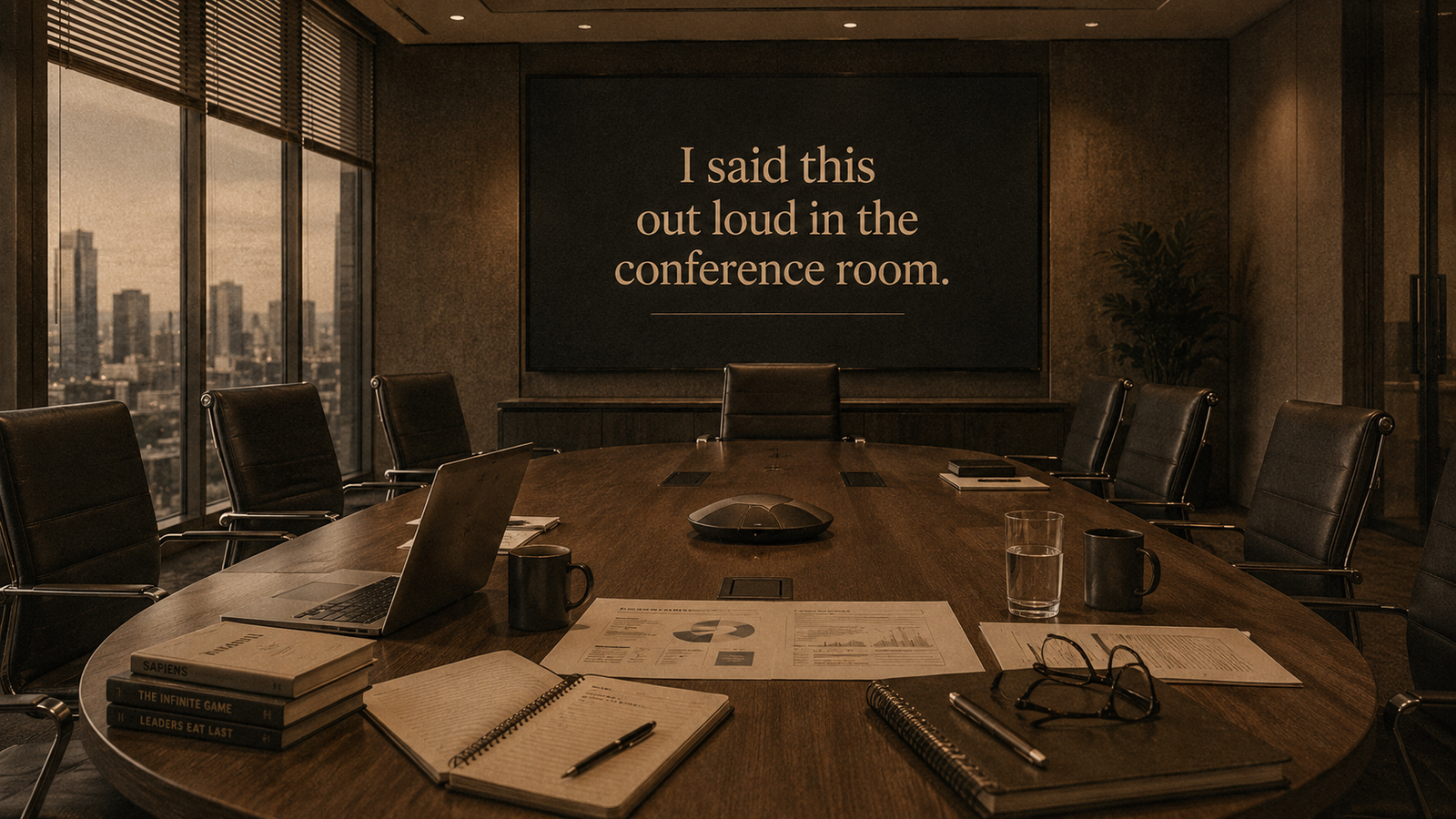
The room fell silent for a moment. Twenty-three faces turned toward me, some curious, some skeptical, a few rolling their eyes at what they probably thought was another “AI is taking over the world” rant. But I wasn’t there to fear-monger or predict doom. I was there to remind them of something we’d all forgotten in our rush to automate everything—the irreplaceable magic of being human at work.
“Your AI can write code, analyze data, and even craft compelling presentations,” I continued, watching their expressions shift from polite attention to genuine curiosity. “But it can’t do this.” I gestured around the room, at the coffee-stained notebooks, the doodles on whiteboards, the way Sarah unconsciously tapped her pen when she was thinking, the way Marcus always leaned back in his chair when he was about to share a controversial idea.
AI can’t replicate the electricity that fills a room when someone suddenly exclaims, “Wait, what if we tried this completely different approach?” It can’t manufacture the collective intake of breath when an idea so brilliant and unexpected lands in the middle of a mundane Tuesday meeting that everyone stops what they’re doing to really listen. These moments of spontaneous creativity don’t emerge from algorithms or data processing. They bloom from the beautiful chaos of human minds colliding, connecting, and creating something entirely new together.
I watched as Recognition dawned on a few faces. They were remembering what it felt like to be part of something bigger than the sum of their individual contributions. They were remembering the joy of genuine collaboration.
Your AI can optimize workflows and schedule meetings, but it can’t create the moment when the entire team stays behind after a late session, ordering pizza and suddenly finding themselves laughing until their stomachs hurt over something that wasn’t even that funny. But in that laughter, something shifts. Trust deepens. Barriers fall. The next day, ideas flow more freely because vulnerability has been shared and connection has been established.
AI can analyze personality types and suggest team-building activities, but it can’t generate the organic moment when the quietest person in the room suddenly shares an insight so profound that it changes the entire direction of the project. It can’t create the feeling of collective pride when everyone realizes they’ve just witnessed something special—not because of perfect planning, but because human intuition and courage converged at exactly the right moment.
The technology can process feedback loops and generate reports on team dynamics, but it can’t manufacture the wordless communication that happens when a team has worked together long enough to read each other’s energy. It can’t replicate the way Emma knows to bring an extra coffee for Jake when he’s stressed, or how the whole team instinctively gives Maria space to process when she gets that particular look in her eyes that means she’s working through something complex.
These aren’t inefficiencies to be optimized away. They’re the invisible threads that weave a group of individuals into a cohesive unit that can achieve things none of them could accomplish alone.
AI can generate creative content, but it can’t create the moment when someone builds on someone else’s half-formed idea, and then another person adds their twist, and suddenly what started as a random thought becomes the breakthrough the entire project needed. This kind of collaborative creativity isn’t just about the end result-it’s about the journey of creation itself, the way ideas evolve and transform through human interaction in ways that surprise even their creators.
Your AI can track productivity metrics and monitor project timelines, but it can’t measure the value of the conversation that happens when two colleagues bump into each other at the coffee machine and one mentions a problem they’re stuck on, leading to a solution that saves three weeks of work. It can’t quantify the innovation that emerges from the messy, unplanned interactions that happen when humans share physical and emotional space.
The software can analyze customer feedback and suggest improvements, but it can’t replicate the passion in someone’s voice when they’re explaining why a particular feature matters to them personally. It can’t generate the infectious enthusiasm that spreads when someone truly believes in what they’re building, turning a routine project into a mission that everyone wants to be part of.
AI can schedule celebrations and even generate congratulatory messages, but it can’t create the genuine pride and joy that fills a room when a team accomplishes something difficult together. It can’t manufacture the way people naturally gravitate toward each other during moments of triumph, the spontaneous high-fives, the shared grins of people who’ve weathered storms together and emerged stronger.
The technology can process emotional data and provide insights about team morale, but it can’t generate the moment when someone admits they’re struggling and the entire team naturally rallies around them. It can’t create the trust that builds when people see each other’s vulnerabilities and choose to support rather than judge. These moments of authentic human connection transform workplaces from job sites into communities.
Your AI can optimize communication patterns and suggest better collaboration tools, but it can’t create the moment when someone takes a risk and shares an idea that feels too bold, too different, too unconventional—and instead of being shot down, finds their colleagues building on it with excitement. These leaps of faith, these moments of creative courage, can only happen when humans feel safe enough to be vulnerable with each other.
The software can analyze successful team patterns and recommend best practices, but it can’t generate the unique culture that emerges when a specific group of people decides to care about each other’s success as much as their own. It can’t manufacture the way inside jokes develop, the way shared experiences create shorthand communication, the way common struggles forge bonds that last beyond project deadlines.
AI can generate training materials and development plans, but it can’t create the organic mentorship that happens when someone with more experience notices potential in a colleague and takes the time to nurture it. It can’t replicate the pride a mentor feels when their mentee exceeds expectations, or the gratitude that builds lasting professional relationships.
The room was quiet now, but it was a different kind of quiet than when I’d started. It was the quiet of people remembering what they’d forgotten, recognizing something valuable they’d taken for granted. I could see it in their faces—the realization that in our eagerness to leverage technology, we’d somehow started treating human connection like an inefficiency rather than our greatest asset.
“Your AI is brilliant,” I concluded, “but it’s a tool, not a replacement for the irreplaceable magic of human creativity, connection, and collaboration. The question isn’t what AI can do-it’s what we choose to keep doing ourselves.”
Because at the end of the day, work isn’t just about productivity and output. It’s about the shared human experience of creating something meaningful together. It’s about the relationships we build, the trust we establish, the moments of joy we share along the way. These things can’t be automated, optimized, or artificially generated.
They can only be lived, experienced, and cherished by the wonderfully imperfect, beautifully human beings who show up each day, bringing their whole selves to the work that matters to them.
And that, my friends, is what no AI will ever be able to do.
